
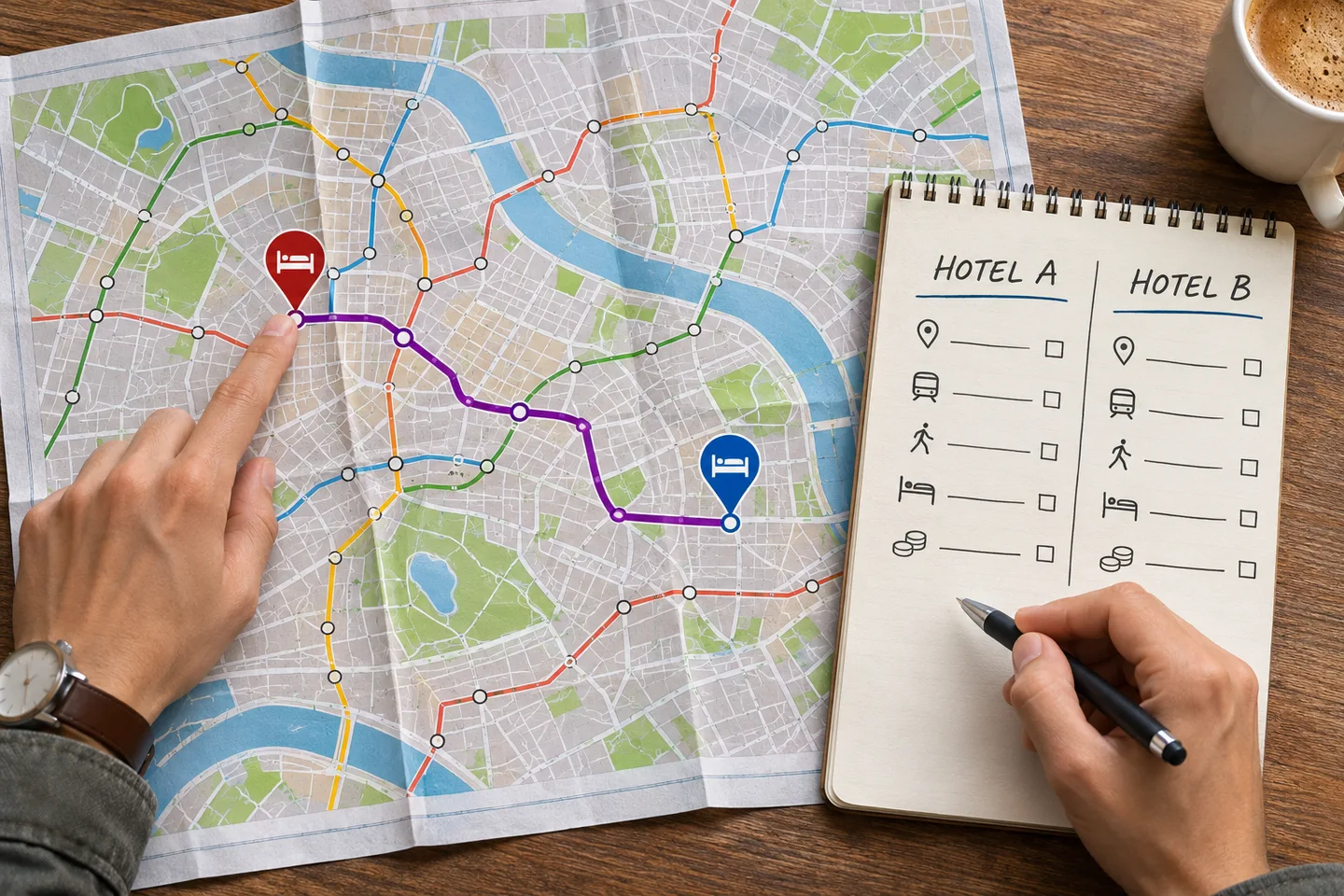
Map the trips you will repeat
Pick your arrival point and three places you are most likely to visit. For each hotel option, estimate the door-to-door journey at the hours you expect to travel. Include walks to stops, time for transfers and a plausible evening route. Use the transit operator’s trip planner or published schedules before booking. A central-looking map pin may be awkward for the trip you have planned.
Test the arrival and departure separately
Check how you would reach the hotel with luggage and what happens if you arrive after the normal check-in window. Look at the departure in reverse. An early return trip can make a route that was easy in the afternoon harder to use. Ask the property about check-in instructions or luggage storage if your plan depends on them.
Compare total costs with the same assumptions
List the room rate and displayed mandatory charges, plus the transport and parking you expect to pay. For a fictional two-night trip, Hotel A costs $260 plus $70 in local transport. Hotel B costs $300 plus $20 in transport. On those assumptions, Hotel B costs $10 less. Change transport estimates if most of your planned outings are optional or you plan to share rides.
Consider the last few blocks
Look at the route between transit and the hotel entrance. Note stairs, crossing points, steep stretches and sheltered waiting areas if they matter to your group. If you need a step-free route, check the stations and entrances with current operator and property information. Confirm the correct address when a chain has several nearby locations.
Use a compact shortlist
Make one row per hotel with total cost, arrival route, expected daily travel time, late-night route and a question to verify. Choose the option that fits the trip you expect to take most days. If two options are close, use cancellation flexibility and the simplicity of the arrival route to break the tie.